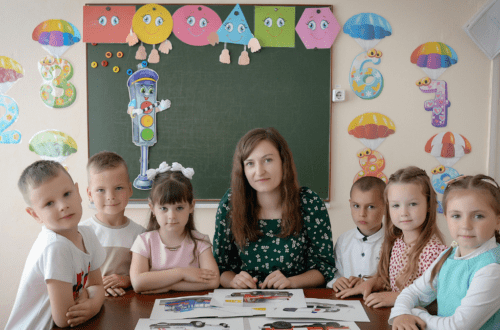
The first day of kindergarten is a landmark occasion. For children, it’s a big step into a wider world of friends, learning, and independence. For parents, it’s a mix of pride, excitement, and a little bit of anxiety.
I will never forget my children’s first day of school. One was more than ready but the other definitely had separation anxiety very early on. In fact, they couldn’t have been more different in that regard. We were of course teaching our kids many of the skills they’d need, from preschool patterns and shapes to letter recognition, but they also each had their own personalities and needs. My oldest could read early and was happy to go to school.
My youngest child with sensory processing disorder needed a bit more support to feel safe. And that’s okay we aren’t all the same and we don’t all progress at the same rate.
We all want our kids to walk through those classroom doors feeling confident and ready to succeed. While the academic journey officially begins there, the true foundation for school success is built in the precious years leading up to it.
Table of Contents
What is Involved in School Readiness?
As early childhood educators and parents, we often think about pre-reading and number recognition, but schol readiness is much broader. It’s about a set of skills that allow a child to navigate a classroom, engage with a teacher, collaborate with peers, and follow directions. Think of it this way: a child can know all their letters, but if they are unable to sit for a five-minute story or ask for a turn, they will struggle to show what they know.
Before we dive into our fun new Preschool Patterns and Shapes worksheet packet, let’s talk a little about some of the core skills little ones need to thrive in a kindergarten environment.
The Basics of Kindergarten Readiness
A child entering kindergarten should be developing skills in a few key areas:
1. Social and Emotional Development
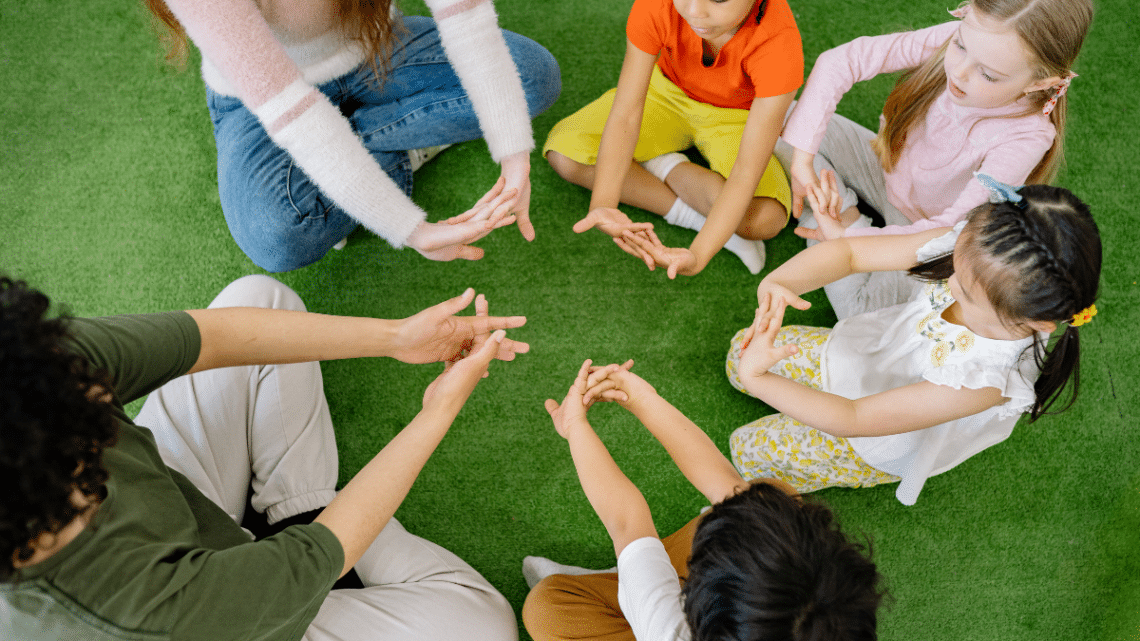
This is the cornerstone of all learning. Can your child manage big emotions, play cooperatively with others, and show empathy? Social skills like sharing, taking turns, and understanding others’ perspectives are essential for a positive classroom experience. At this age, readiness means a child can, with support, solve a simple conflict with words and manage their frustration when they can’t get what they want immediately.
2. Fine Motor Skills
Strong hand muscles are essential. In kindergarten, children will be expected to use a pencil, handle scissors, and open their own snack containers. Activities that develop fine motor skills—like molding playdough, using tongs to pick up small objects, and, yes, completing activities on worksheets—build the strength and dexterity needed for printing and writing.
3. Cognitive and Pre-Academic Skills
This is where the excitement for learning can grow. Children begin to observe their world and make sense of how things work. They will start to count, recognize their name, and grasp basic spatial concepts such as like over, under, and beside.
Crucially, this is the stage where children develop patterning and shape recognition skills. This isn’t about memorizing labels; it’s about a foundational understanding that the world has structure. They are learning to observe, categorize, and predict.
They see that a day has a predictable order (morning, noon, night) and that a shirt might have a simple blue-white-blue-white pattern. This logical thinking is the gateway to both math and literacy, where recognizing patterns in numbers and sounds is essential.
Introducing the Preschool Patterns and Shapes Matching Series
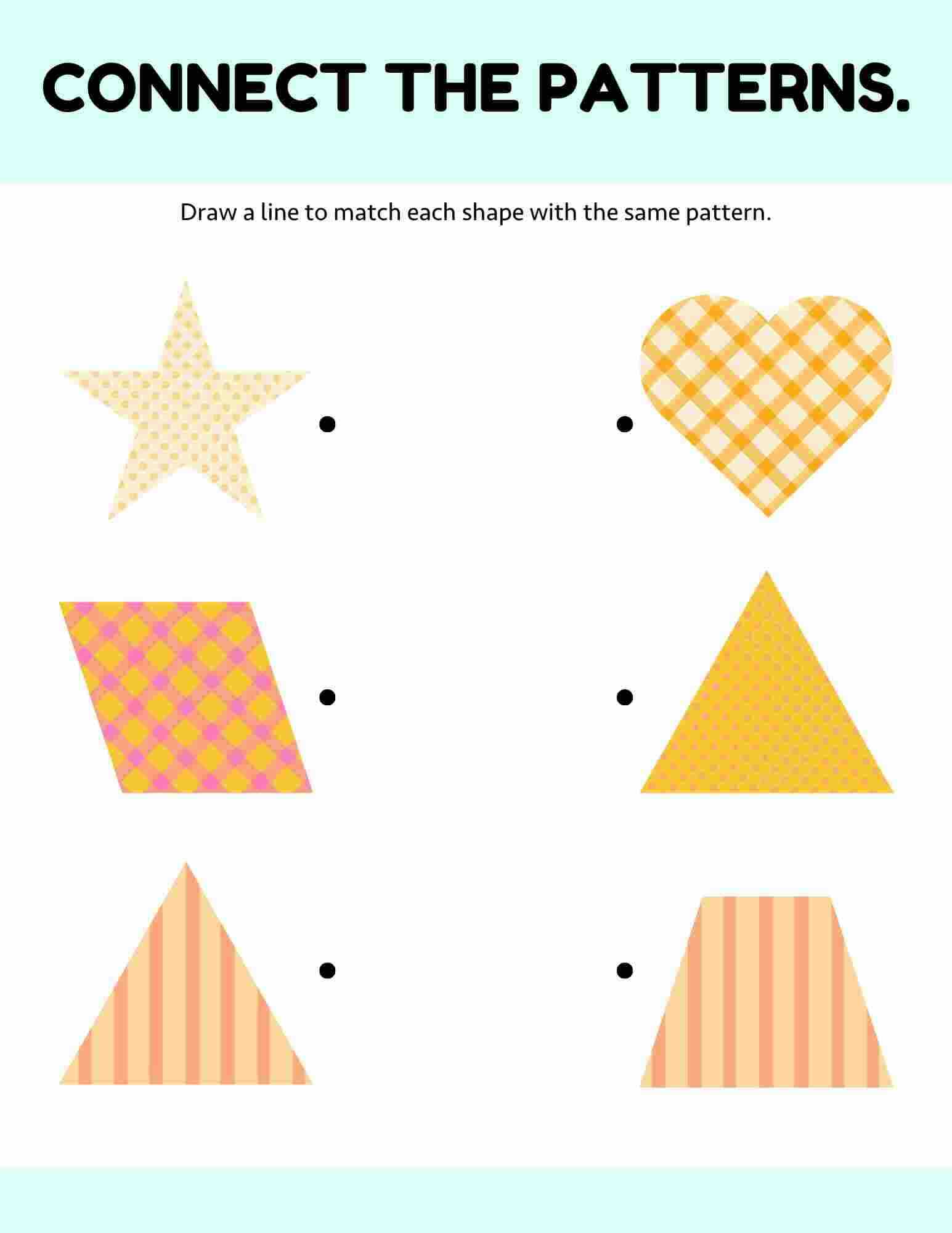
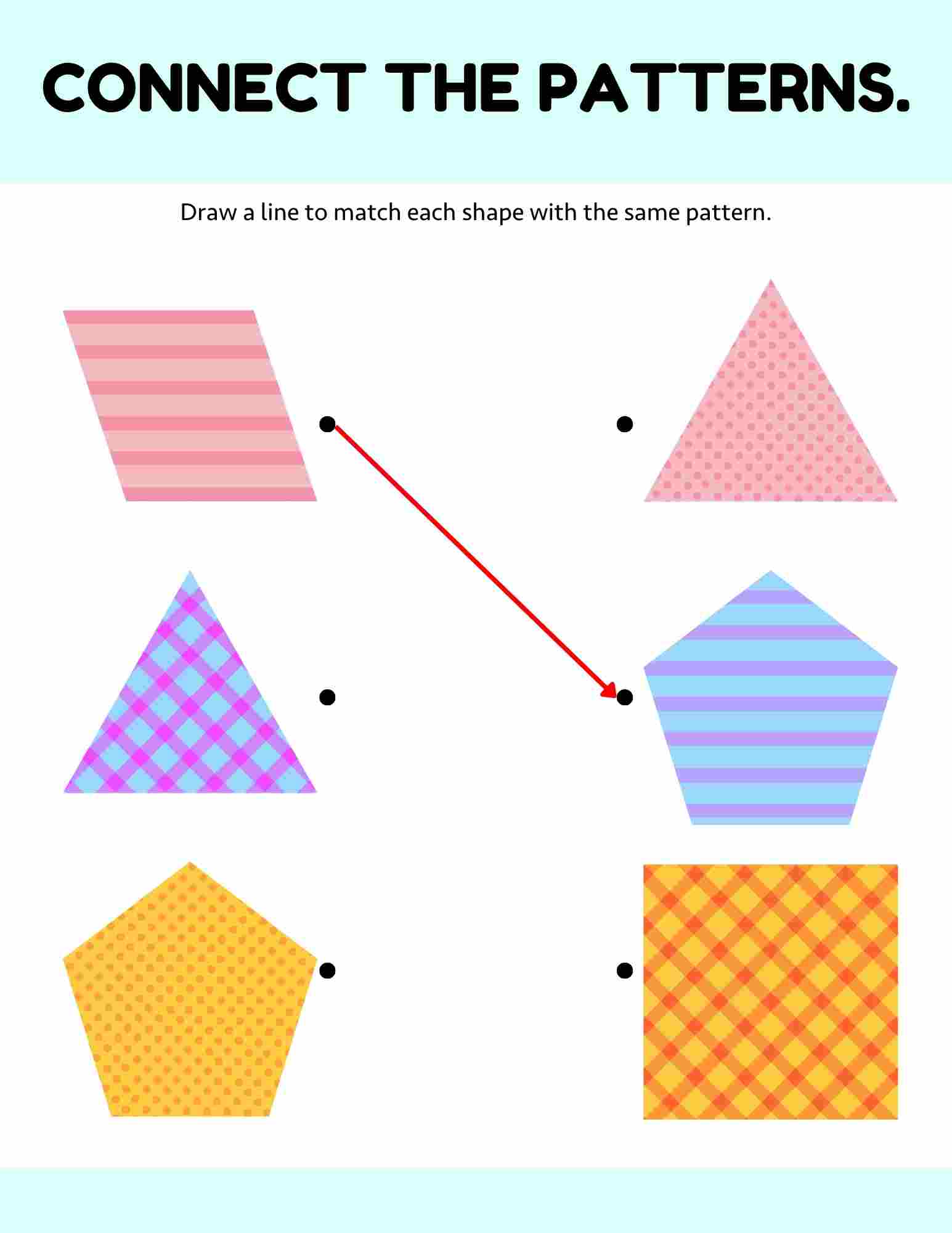
I am excited to introduce this new, free printable worksheet packet designed for exactly this purpose! This playful collection focuses on two key readiness skills: shape recognition and pattern copying.
With bright colours and friendly, age-appropriate illustrations, your child might not even realize they are “learning.” Each worksheet is an invitation to explore. They’ll get to search for matching pairs of shapes, identifying everything from simple circles and squares to more complex stars and hearts.
We’ve also included a variety of pattern activities. Your child will practice copying a given pattern (like circle, square, circle) and then, in the next step, predict and draw what comes next. This simple task is a cognitive workout. It requires logic, sequence prediction, and fine motor control.
Get This Preschool Patterns and Shapes Activity Now
These worksheets can be more than just a passive activity. Use them to sit with your child, to talk about what they see (“What colour is that square?”), and to celebrate every moment they recognize the pattern and draw the match. It’s about making learning a joyful, shared experience that builds their skills and their confidence, one matching shape at a time.
Get Your Content Here: Please remember these are for your use. They are not for reprinting on your own website or other publication.
Don’t miss my Common sight words for kindergarten and preschool
Post may contain affiliate links as a service to readers. Any purchases made via qualifying links may mean a small commission for me.
Don’t forget these handy supplies you need to make your printables last:
Printer paper helps. Yes, it is pretty expensive these days. This Amazon Basics paper is pretty good. Scotch PRO Thermal Laminator is excellent. Highly recommend. And bonus it doesn’t take up much space in your family room or your home office. Use it for some of the printables like the word search and search and find projects and then hand them out with erasable markers. Reuse over and over.
Happy Crafting and Camping and Word Games and even Back to School!
Stay Tuned – There are more worksheets to come.