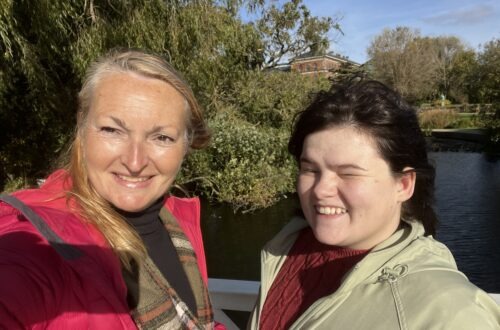
The Hidden Disabilities Sunflower lanyard program is an incredibly valuable tool for anyone who travels with an invisible disability. Three of us in my family have invisible disabilities. Two of us recently used the lanyards. This is our experience with the sunflower lanyard program.
Table of Contents
The Stats
There are about 1.3 billion people worldwide with disabilities and an estimated 80% of those people have an invisible disability. This equates to roughly 1 billion people globally. The tourism industry can’t afford to ignore that large of a population. Every major airport, train station and transportation hub across the globe should embrace this program for that reason alone. Not to mention hotels, Airbnbs and tourist attractions. So many reasons to partner with the program and to meaningfully accommodate people with accessibility needs.

How it Worked for Us
When my older daughter and I flew to Scotland last year from Pearson in Toronto, we used the lanyards for the first time. In November, both at Pearson and Glasgow airports, staff recognized the lanyard and that was so valuable. At each airport, first at Pearson, we were gently asked if we need any support. At the start of the security line, we were feeling a bit apprehensive because one of us was travelling with a new medication and injections that needed to stay chilled in special packaging. So, when asked if we needed help or had questions, we mentioned the medication and were taken through a separate line to screen it privately.
In Scotland, when we landed, an airport employee approached and asked if we needed any support. They recognized the lanyard immediately. We were fine at that point but it is also comforting and reassuring to know that the UK totally got it and was more than supportive. Scotland was extremely aware of the program and that was a great feeling.
What is the Program About?

The Hidden Disabilities Sunflower lanyard program is a globally recognized initiative designed to help people with invisible disabilities. Some examples might be autism, Colitis, Crohn’s disease, chronic pain, ADHD, Audhd, arthritis, or visual impairments. This lanyard acts as a symbol that discreetly signals that someone wearing it may need a bit more time, patience, or assistance while navigating public spaces.
In the context of travel, the Hidden Disabilities Sunflower Lanyard program has become a standard at hundreds of airports and transit hubs worldwide. It should, in my opinion, be adopted even more widely.
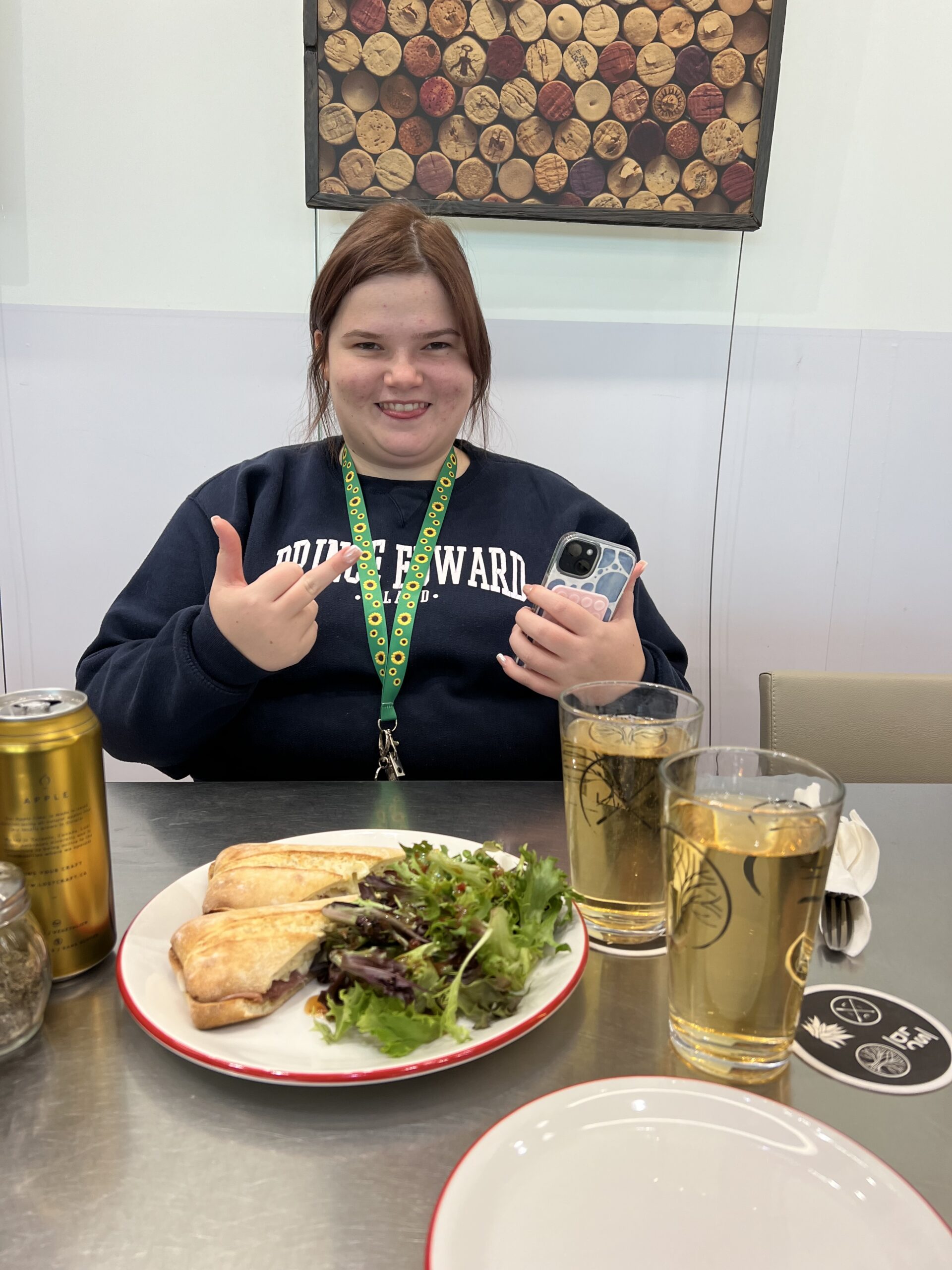
At Billy Bishop when I flew Porter last year I didn’t have the lanyard yet and knew nothing much about them. Not like we have ever had any big issues ever at Billy Bishop Airport, which has always been an efficient travel hub for us. But at that time I found a sunflower sticker in the airport and slapped it on my carryon. Why? Here’s the thing about my own disability (Crohn’s disease) some days are good, others are okay and some are horribly painful like can’t get out of bed gut-wrenching pain. So it’s a good thing to have if or when you need it.
How It Works for Travelers
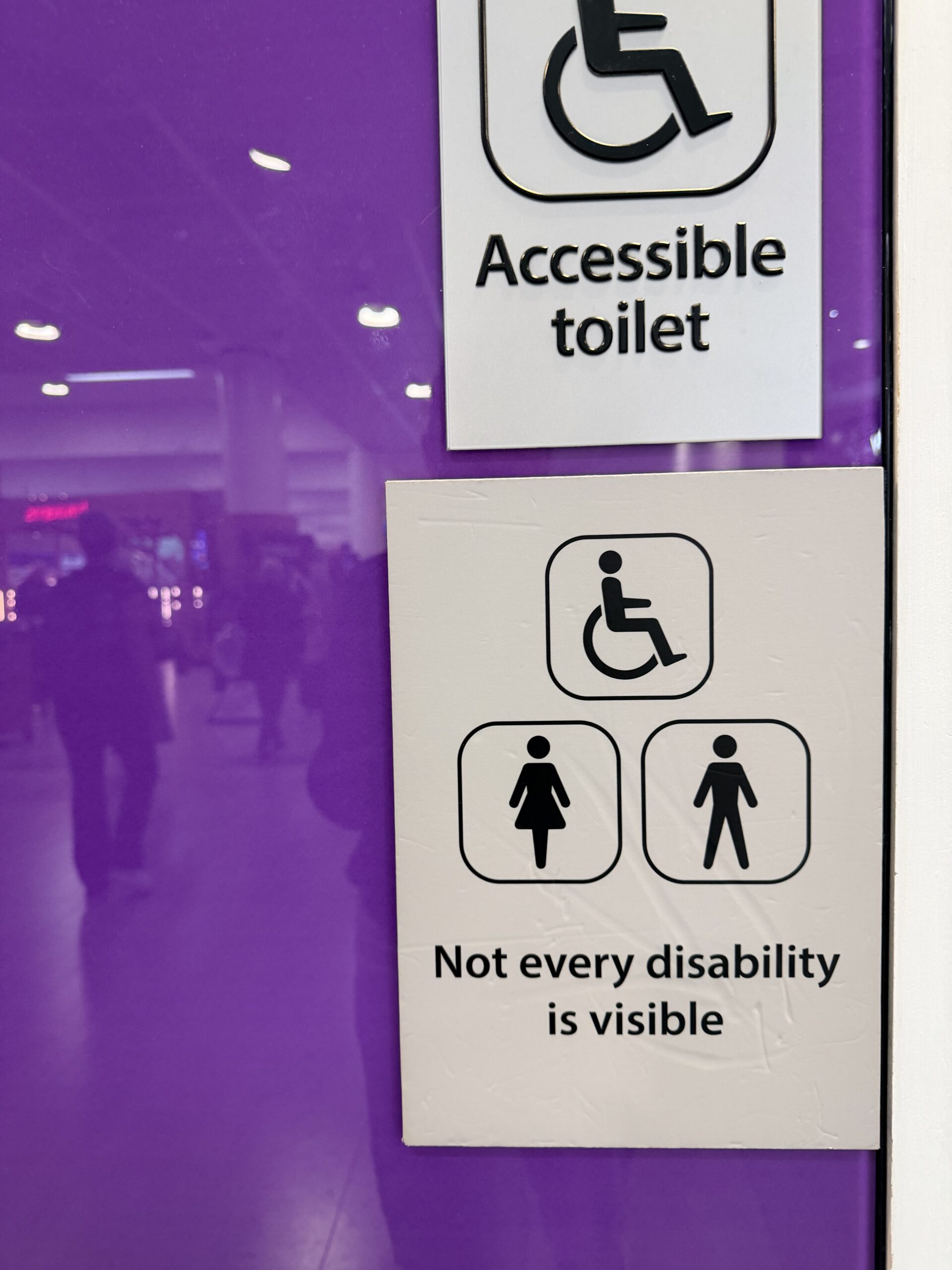
- The Symbol: Travelers wear a bright green lanyard (or a pin/wristband) decorated with yellow sunflowers.
- The Signal: It acts as a visual cue for airport staff, flight crews, and security teams. It tells them that the wearer might need help with instructions, more time at security checkpoints, or assistance during boarding. The lanyard is a signal the traveler doesn’t may need support and shouldn’t need to explain their specific condition.
- Staff Training: Participating organizations train their employees to recognize the lanyard and provide appropriate support. Staff can help find a quiet space or simplify directions.

Where You’ll Find It
The program is particularly strong in the UK, Europe, North America, and Australia. Many major Canadian hubs, including Toronto Pearson (YYZ) and Vancouver International (YVR), are active participants.
Payton and I used this program late last year when we visited Scotland for the first time. We were blown away at how useful this was. Wearing the lanyard around your neck is a visual cue to staff trained in the program to connect and support people travelling with hidden disabilities. This past spring, we also used it again in Toronto and the UK, when we visited London, England. I love that it is a quiet means of establishing that sometimes people need a different speed.
This year, the initial part of our security screening at Pearson was pushy and impatient and not cool, as if the one worker had no clues at all. But maybe it was just a bad day or perhaps she hadn’t been trained in the use of the lanyards yet.
But then another employee at Pearson recognized the lanyard and shifted gears. There was also a couple ahead of us with a young toddler in a stroller. Together went through the same line which had clearly lower volume traffic.
How Did It Work in the UK?
At the Gatwick airport in London England the differences were impressive and incredibly sensitive. There’s an entire large room at the end of one of the gates designated for people who need a quiet space. Overwhelmed, finding it simply too loud or too bright? Then use this space to self regulate. Also, I have never seen so many children wearing the sunflower lanyards in an airport, which tells you a whole lot about disability accommodation and education in the UK. Personally felt like they are about 5-10 years ahead of Canada in that regard.
Three people in my family have hidden disabilities and we travel with medication, supplies and whatever other treatments prescribed. One of my kids has a mobility issue so getting through an airport can be taxing. But we also all love to travel so we are always looking out for ways to make it happen. Travel, one of life’s greatest joys, plus quite frankly often one of life’s necessities, should be accessible and all service and hospitality related businesses should be striving for ways to improve that for all.
A Few Important Notes
It’s Not a Fast Pass: The lanyard does not generally allow you to skip lines or bypass standard procedures. Some airports do have dedicated assistance lanes where the lanyard is recognized.
Voluntary: It is entirely up to the traveler whether they want to wear it. You don’t need to provide medical documentation to pick one up or order online.
Availability: You can find them for free at airport Information or Customer Service desks sometimes. Check the specific airport’s website ahead of time to see if they require you to have one or if they have them at the airport. Or better yet, read below for more ideas.
The Sunflower Lanyard
We will be travelling again of course and frankly this is a tool I won’t leave behind. It made our experience so much less nerve-wracking and put us at ease.
Here’s How to Order One Directly:
Allow a few weeks for it to arrive before you travel. Ours did not take very long and my daughter was on top of this early. So, the lanyards worked really well, as they should, in most places for us.